
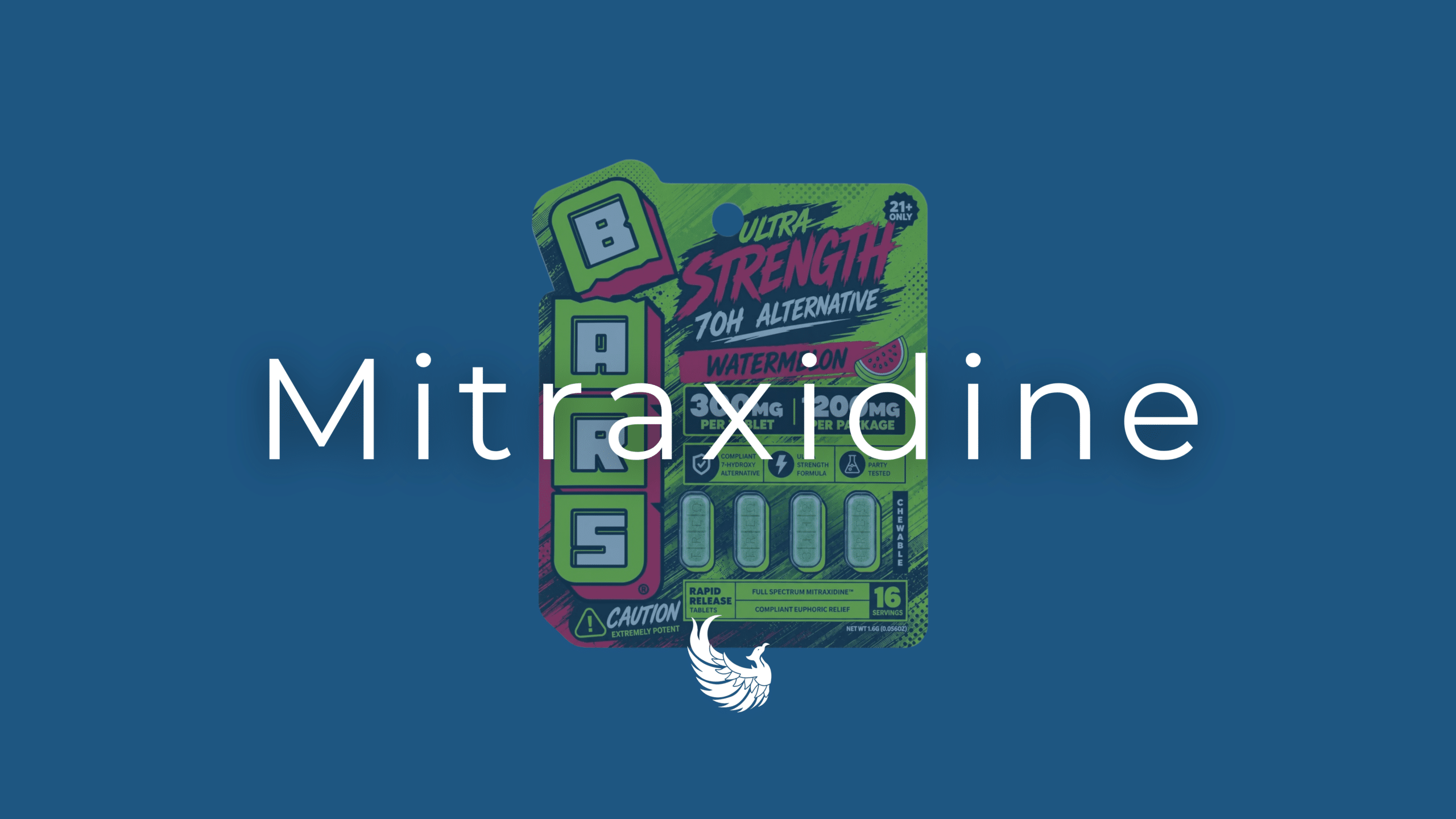
You may be looking for a 7-OH alternative because something about your current use no longer feels manageable. Perhaps you are worried about withdrawal, tired of planning around tablets, or trying to find a way to stop without disrupting work and family responsibilities.
A different product can seem like a practical answer. It offers something concrete to try while the larger problem still feels difficult to face.
Mitraxidine is one of the names appearing in that search. But evaluating a replacement product and addressing a substance use problem are different tasks. If the same worries, symptoms, or loss of control continue after a switch, those concerns deserve attention regardless of the name on the package.
Key Points
- A “7-OH alternative” label does not establish that a product can treat 7-OH withdrawal.
- Changing products may leave important questions about dependence, cravings, and daily functioning unresolved.
- Physical dependence and addiction are related concepts, but they are not identical.
- Research on traditional kratom products cannot automatically predict outcomes with a proprietary blend.
- Phoenix Rising Recovery offers assessment and treatment services in Palm Desert for people seeking help with substance use and related mental health concerns.
Where Mitraxidine Fits Into the Conversation
BARS markets Mitraxidine as a proprietary kratom-derived blend and a 7-OH alternative. Its description says the formulation excludes 7-OH and several other named compounds.
That description identifies a commercial product. It does not establish a medically validated transition from 7-OH, an equivalent dose, or a reliable withdrawal schedule.
The FDA’s kratom guidance states that there are no FDA-approved kratom drug products. Consumers should therefore distinguish a seller’s product positioning from evidence supporting a treatment.
This is particularly relevant when the reason for buying a product is to manage symptoms. Feeling that something helps in the moment is important information to share with a clinician, but it does not answer questions about longer-term outcomes.
Why a Product Switch May Leave the Original Problem Unresolved
Consider someone who stops buying one type of tablet and begins using another. The package changes, but they still feel unable to leave home without a supply. They continue spending more than planned, and previous attempts to stop have ended because they felt unwell.
That hypothetical situation does not prove a diagnosis. It does show why the person’s experience matters more than whether a purchase belongs to a different marketing category.
A useful assessment asks:
- Is use becoming easier to control?
- Are health, sleep, and daily responsibilities improving?
- What happens when a planned amount is unavailable?
- Has the switch introduced additional ingredients or other substances?
- What support would make the next change more manageable?
These questions leave room for honest progress. Someone can have taken a meaningful step and still need help with what remains.
Physical Dependence and Addiction Need Different Questions
Physical dependence involves adaptation to a substance, with withdrawal symptoms potentially emerging when it is reduced or stopped. Addiction involves a broader pattern of impaired control and continued use despite harmful consequences.
Dependence alone does not establish addiction. A person may need medical support for withdrawal without having the same behavioral pattern as someone whose use is disrupting multiple areas of life. NIDA explains this distinction in its principles of addiction treatment.
The distinction also protects against dismissing someone’s concerns. “I only take it to feel normal” does not settle whether treatment is needed. A clinician still needs to understand symptoms, functioning, and the history of use.
What kratom research can—and cannot—tell us
A study of 395 adult kratom consumers found that frequency of use was more closely associated with certain withdrawal and kratom use disorder measures than the amount used. However, nearly all participants primarily used whole-leaf products, and the research relied on self-reported information.
The findings do not establish a Mitraxidine withdrawal pattern or prove that every frequent user has an addiction. They support paying attention to patterns over time instead of focusing only on one number on a label. See Rogers and colleagues’ 2024 study.
Can Mitraxidine Treat 7-OH Withdrawal?
The evidence reviewed for this article does not establish Mitraxidine as a safe and effective treatment for 7-OH withdrawal.
NCCIH reports that kratom has not been shown to be safe and effective for opioid withdrawal or another medical use. That general evidence gap cannot be resolved by a testimonial about a particular blend. See NCCIH’s review of kratom.
Someone might report temporary relief after switching products. That experience can be real while still leaving unanswered questions: which ingredients produced the effect, whether withdrawal was postponed, whether a new adverse effect occurred, and what happens with continued use.
Why there is no reliable do-it-yourself conversion
A proprietary blend cannot be converted into an equivalent amount of 7-OH simply by comparing package weights. Different products may contain different active compounds and different concentrations.
The same limitation applies to a fixed “Mitraxidine detox timeline.” Without adequate product-specific clinical evidence, a precise schedule would create false certainty.
A clinician can instead assess the person’s actual symptoms, prior products, medications, and health history. That assessment provides a basis for deciding whether outpatient care, supervised withdrawal management, or another level of support is appropriate.
Marketing Can Make the Decision Feel Simpler Than It Is
Alternative-product marketing often centers on the next purchase. Recovery planning needs to consider what happens after that purchase.
This difference becomes especially important when presentation suggests medical credibility. BARS’ pharmaceutical-style name and segmented tablet design can evoke Xanax bars, even though visual similarity establishes neither shared ingredients nor equivalent effects.
Claims about purity, laboratory testing, or excluded ingredients also answer narrower questions than consumers may assume. None of those claims alone demonstrates successful treatment of dependence.
When evaluating a product intended to help you stop another substance, look for evidence about that specific treatment purpose. A confident sales description cannot replace it.
What to Tell a Clinician Before Making Another Change
You do not need a complete chemical explanation to seek help. A clear account of your experience is useful.
Bring or write down:
- The products involved: Current packaging, photographs, and names of recently used products.
- The pattern of use: How often you use them, how long that pattern has continued, and whether it has changed.
- Symptoms: What you notice before use, after use, and when use is delayed.
- Other substances and medications: Include prescriptions, over-the-counter products, alcohol, and supplements.
- Previous attempts to stop: What helped, what became difficult, and why you resumed.
- Your priorities: Work, caregiving, pain, sleep, anxiety, privacy, or other concerns affecting your choices.
It is reasonable to say that you are unsure what a product contains. That uncertainty is part of the information a clinician needs.
An appointment should also leave room for why you began using it. Concerns about pain, mood, or sleep deserve assessment rather than being treated as an afterthought.
Medical Treatment Is Different From Choosing Another Retail Product
Concerns about product substitution should not discourage people from evidence-based medication treatment.
For opioid use disorder, medications such as buprenorphine have established clinical roles. NIDA describes evidence that buprenorphine treatment reduces withdrawal and cravings and lowers important risks associated with opioid use disorder. See NIDA’s guidance on buprenorphine treatment.
Whether a medication is appropriate for a person using kratom extracts, 7-OH, or a proprietary blend requires an individual clinical decision. Evidence for treating opioid use disorder should not be presented as proof of a universal Mitraxidine protocol.
The relevant features of medical care include a defined treatment purpose, clinical monitoring, and follow-up. Taking an appropriately prescribed medication can be part of recovery.
Planning for Life Beyond Withdrawal
If withdrawal management is needed, it addresses an immediate concern. Continuing care addresses what may make substance use difficult to change over time.
That work might include discussing triggers, practicing responses to cravings, attending appointments, and rebuilding routines. It can also involve treatment for a co-occurring mental health condition when one is identified.
NIDA emphasizes that treatment should respond to a person’s medical, psychological, and social needs and that detoxification alone is generally insufficient treatment for addiction. See NIDA’s treatment principles.
For someone whose use has become organized around ordering, checking inventory, or avoiding discomfort, practical goals may be especially helpful. Those goals could include making it through a workday with an agreed treatment plan, having an honest conversation with a partner, or knowing whom to call when cravings return.
The plan should be specific enough to use and flexible enough to adjust.
Treatment at Phoenix Rising Recovery
Phoenix Rising Recovery provides addiction treatment in Palm Desert, serving the Palm Springs and Coachella Valley area. Its services include detoxification, residential treatment, outpatient programs, and recovery support. Learn more about Phoenix Rising Recovery.
People concerned about kratom-related use can explore the center’s kratom detox services. Those also experiencing mental health symptoms can ask about dual diagnosis treatment.
The appropriate level of care depends on an assessment. A particular product name does not automatically determine whether someone needs residential care or can be supported through an outpatient program.
Call 866-985-1103 or contact Phoenix Rising Recovery to discuss what you have been using, what concerns you, and what treatment options may fit.
When Symptoms Require Immediate Help
If someone is unresponsive, call 911. For a suspected adverse reaction or poisoning, contact Poison Help at 1-800-222-1222. Have the packaging available if possible, but do not delay emergency care while searching for it. These resources are included in the FDA’s 7-OH safety guidance.
Frequently Asked Questions
Is switching from 7-OH to Mitraxidine the same as detoxing?
A product switch does not establish that withdrawal has been completed or that dependence has resolved. Those questions require attention to symptoms, ingredients, and the person’s ongoing pattern of use.
Can someone experience withdrawal from kratom products?
Yes. NCCIH reports that regular kratom users may experience withdrawal after stopping. That does not establish a precise withdrawal course for every concentrated or proprietary product.
Does feeling unwell without a product mean I have an addiction?
It may suggest physical dependence, but it does not establish addiction by itself. A clinician also considers control over use, consequences, and other symptoms.
Do I have to know exactly what Mitraxidine contains before seeking treatment?
No. Bring whatever packaging and product information you have. Your symptoms, history, and concerns are enough to begin a conversation.
Is medication treatment simply another product substitution?
Evidence-based medication treatment involves clinical assessment, an established therapeutic purpose, monitoring, and follow-up. It should not be equated with independently replacing one retail blend with another.
Will everyone concerned about Mitraxidine need residential treatment?
No. Treatment recommendations depend on the individual’s needs, including symptoms, other substance use, mental health, and available support. An assessment helps determine the appropriate setting.
Related Resources
Related Treatment Pages
Sources
BARS. (n.d.). BARS 7OH-alternative Mitraxidine tablets—Mixed Berry [Product description and promotional imagery].
National Center for Complementary and Integrative Health. (2022, April). Kratom. National Institutes of Health. https://www.nccih.nih.gov/health/kratom
National Institute on Drug Abuse. (n.d.-a). Initiating buprenorphine treatment in the emergency department. https://nida.nih.gov/ed-buprenorphine
National Institute on Drug Abuse. (n.d.-b). Principles of drug addiction treatment: A research-based guide (3rd ed.). https://nida.nih.gov/sites/default/files/podat-3rdEd-508.pdf
Phoenix Rising Recovery. (n.d.). Phoenix Rising Recovery Center. https://www.phoenixrisingrecovery.com/
Rogers, J. M., Weiss, S. T., Epstein, D. H., Grundmann, O., Hill, K., & Smith, K. E. (2024). Kratom addiction per DSM-5 SUD criteria, and kratom physical dependence: Insights from dosing amount versus frequency. Drug and Alcohol Dependence, 260, Article 111329. https://doi.org/10.1016/j.drugalcdep.2024.111329
U.S. Food and Drug Administration. (n.d.-a). FDA and kratom. https://www.fda.gov/news-events/public-health-focus/fda-and-kratom
U.S. Food and Drug Administration. (n.d.-b). Products containing 7-OH can cause serious harm. https://www.fda.gov/consumers/consumer-updates/products-containing-7-oh-can-cause-serious-harm
Manufacturer materials document marketing claims, not independent clinical findings. The BARS website is intentionally not linked.