
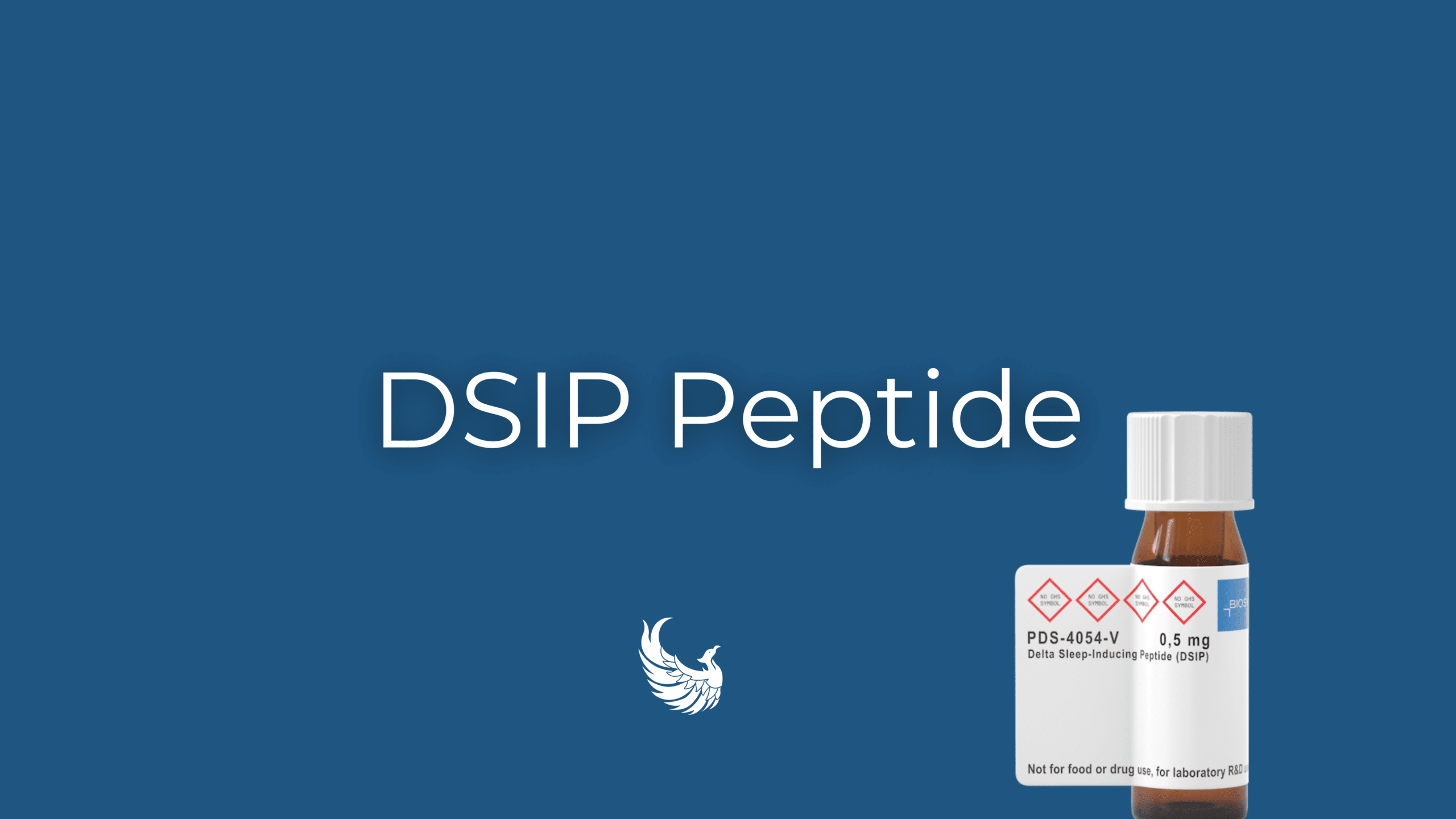
What Is DSIP?
DSIP, short for Delta Sleep-Inducing Peptide, is a naturally occurring peptide that was first identified in the 1970s. It’s believed to play a role in regulating sleep, stress response, and possibly hormone balance.
Researchers originally became interested in DSIP because of its connection to deep sleep cycles, particularly delta wave sleep, which is the most restorative phase of sleep.
Over time, it’s also been studied for its potential effects on:
- Stress regulation
- Cortisol levels
- Pain perception
- Withdrawal symptoms
That last point is what’s driving interest in addiction and recovery spaces today.
Table 1. DSIP Peptide At a Glance
| Category | Details |
|---|---|
| Full Name | Delta Sleep-Inducing Peptide (DSIP) |
| Peptide Type | Endogenous neuropeptide (naturally occurring in the body) |
| Primary Research Focus | Sleep regulation, stress response, neuroendocrine function |
| Proposed Mechanism | May influence delta wave sleep and modulate neurotransmitters and stress hormones |
| Connection to Opioid Dependence | Studied for potential support during withdrawal (sleep, stress, discomfort), not for treating addiction itself |
| Effects Being Studied | Improved sleep quality, reduced stress response, possible modulation of withdrawal symptoms |
| Clinical Evidence | Limited and inconsistent; mostly animal studies and small or older human trials |
| FDA Approval Status | Not FDA approved for any medical use |
| Availability | Sold online as “research chemical” or “research peptide” |
| Legality | Legal to sell for research purposes, not approved for human consumption |
| Administration Methods (Unregulated Use) | Injection (most common in peptide markets), sometimes oral or nasal claims (less studied) |
| Onset / Duration | Not well established in humans |
| Potential Risks | Unknown safety profile, lack of dosing standards, contamination risk, no long-term human data |
| Addiction Potential | Not classified as addictive, but insufficient research on long-term use |
| Use in Treatment Programs | Not used in licensed addiction treatment or medical detox settings |
| Common Misconception | That it can replace or treat opioid dependence |
| Evidence-Based Alternatives | Medication-assisted treatment (buprenorphine, methadone, naltrexone), therapy, structured clinical care |
Why People Are Talking About DSIP for Opioid Dependence
When someone comes off opioids, a few things tend to hit hard:
- Severe insomnia
- Anxiety and restlessness
- Dysregulated stress response
- Physical discomfort
DSIP gets attention because it’s believed to:
- Promote deeper, more restorative sleep
- Help regulate stress hormones
- Potentially reduce withdrawal-related discomfort
Some early research has explored DSIP’s effects on withdrawal symptoms, including in opioid-related contexts. The idea is not that DSIP replaces opioids, but that it might support the body during the withdrawal phase.
But it’s important to slow that down a bit.
What the Research Actually Shows
There have been some small studies and experimental models suggesting DSIP may:
- Influence sleep architecture
- Interact with the body’s stress system
- Play a role in modulating withdrawal symptoms
However:
- Most studies are limited or outdated
- Human clinical data is extremely sparse
- Results have been inconsistent across research
In plain terms, DSIP is still not well understood, and it has not been developed into a standardized or approved medical treatment.
The Reality: DSIP Is Not an Approved Treatment
DSIP is:
- Not FDA approved
- Not prescribed in addiction treatment programs
- Not included in clinical guidelines for opioid use disorder
Even though it sounds promising on the surface, there’s no strong evidence showing that DSIP can:
- Reduce cravings
- Prevent relapse
- Replace evidence-based treatments
It’s being discussed far more in online communities and experimental spaces than in real medical settings.
The Risk of “Research Peptides” Like DSIP
Most people come across DSIP through:
- Peptide websites
- “Research use only” suppliers
- Forums and social media
That creates real risks:
- No regulation or quality control
- Unknown purity and dosing
- No safety oversight
- No long-term human data
Even though DSIP is not an opioid, using unregulated compounds during recovery can still:
- Disrupt progress
- Create new dependencies on routines or substances
- Mask underlying issues without treating them
Why People in Recovery Are Drawn to It
This part matters.
People dealing with opioid dependence are often looking for:
- Relief from withdrawal
- Better sleep
- Something that feels natural or less harmful
- A way to avoid medications like Suboxone or methadone
DSIP gets framed as:
- A “natural peptide”
- A sleep enhancer
- A recovery support tool
But without real clinical backing, it can quickly become another distraction from what actually works.
What Actually Helps With Opioid Withdrawal and Recovery
There are proven ways to manage withdrawal and build long-term recovery.
Medical detox and treatment programs focus on:
- Stabilizing the body safely
- Managing withdrawal symptoms with oversight
- Supporting sleep, nutrition, and mental health
Medications like:
- Buprenorphine
- Methadone
- Naltrexone
Have strong evidence showing they:
- Reduce cravings
- Lower overdose risk
- Improve long-term outcomes
Sleep and stress, which DSIP targets, are also addressed through:
- Structured care
- Therapy
- Medication when appropriate
- Routine and stabilization
A Better Way to Look at It
DSIP is interesting from a research perspective. It may eventually help scientists better understand sleep, stress, and withdrawal.
But right now, it’s not a solution for opioid dependence.
Frequently Asked Questions About DSIP
What is DSIP?
DSIP is a naturally occurring peptide linked to sleep regulation and stress response.
Can DSIP treat opioid withdrawal?
There is no strong clinical evidence showing it can safely or effectively treat opioid withdrawal.
Is DSIP safe to use?
It has not been approved for medical use, and products sold online are unregulated.
Is DSIP addictive?
It’s not classified as addictive, but it has not been studied enough to fully understand its risks in humans.
Sources
U.S. Food and Drug Administration. (2026, March 31). Gram Peptides – 721806 – 03/31/2026. https://www.fda.gov/inspections-compliance-enforcement-and-criminal-investigations/warning-letters/gram-peptides-721806-03312026
U.S. Food and Drug Administration. (n.d.). Certain bulk drug substances for use in compounding that may present significant safety risks. https://www.fda.gov/drugs/human-drug-compounding/certain-bulk-drug-substances-use-compounding-may-present-significant-safety-risks
Kovalzon, V. M., & Strekalova, T. V. (2006). Delta sleep-inducing peptide (DSIP): A still unresolved riddle. Journal of Neurochemistry, 97(2), 303–309. https://pubmed.ncbi.nlm.nih.gov/16539679/
Schneider-Helmert, D. (1987). Effects of delta-sleep-inducing peptide on 24-hour sleep-wake behaviour in severe chronic insomnia. European Neurology, 27(2), 120–129. https://pubmed.ncbi.nlm.nih.gov/3622582/