Alcohol Awareness Month 2025 is currently underway. Learn more about the importance of this month, why it is necessary, and how you can participate.
What is Alcohol Awareness Month?
Alcohol Awareness Month is an annual observance that calls attention to the dangers of alcohol abuse and alcohol use disorder (alcoholism).
It also serves to educate the public about the disease of addiction, eradicate stigma about alcoholism and treatment, and encourage people to get help if they need it.
Alcohol Awareness Month was established in 1987 by the National Council on Alcoholism and Drug Dependence (NCADD). It has been observed every year since its inception.
When is Alcohol Awareness Month in 2025?
Keeping with the tradition that was established in 1987, Alcohol Awareness Month 2025 is in April.
Several sources have noted that April is a particularly appropriate time for this observance, as it is the start of prom season for high school students and just a few weeks before the start of summer vacation.
As the weather gets warmer and the days get longer, it’s important to be aware of what can happen if you overindulge, as well as learn how to support someone who is in recovery or thinking about getting help.
Why is Awareness About Alcohol and Alcoholism Important?
Efforts to increase awareness about alcohol and alcoholism can address several important concerns, including the dangers of alcohol abuse, the value of getting treatment, and the harm that stigma can cause.
The Dangers of Alcohol Abuse and Addiction
Alcohol-related fatalities are one of the leading causes of preventable death in the United States. According to the National Institute on Alcohol Abuse and Addiction (NIAAA):
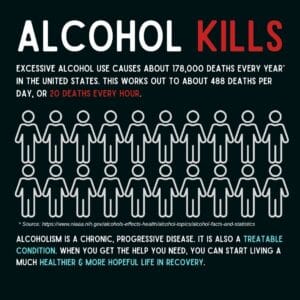
Alcohol is responsible for about 178,000 deaths every year in the U.S. This equates to an average of about 488 deaths per day, or 20 deaths per hour.
Experts estimate that alcohol is a factor in about 7% of all emergency room visits and about 17% of opioid overdose deaths.
Among people who have died by suicide, about 25% had alcohol use disorder and about 20% had alcohol in their system at time of death.
Excessive alcohol use has been linked with a wide range of physical health problems, including:
Irregular heart rate
Damage to the heart muscle
Hypertension (high blood pressure)
Liver disease, including cirrhosis
Pancreatitis
Weakened immune system
Researchers have also found that heavy drinking can increase a person’s risk of several types of cancer, including head and neck, esophageal, breast, colorectal, and liver.
From a psychological perspective, alcohol abuse and addiction are associated with several mental health conditions, including:
Generalized anxiety disorder (GAD)
Depression
Bipolar disorder
Social anxiety disorder (social phobia)
Panic disorder
Posttraumatic stress disorder (PTSD)
Schizophrenia
Schizoaffective disorder
The social cost of untreated alcoholism can also be steep, with effects that can include:
Destroyed relationships
Loss of child custody
Job loss and chronic unemployment
Financial difficulties
Arrests, fines, and incarcerations
Social withdrawal and isolation
Homelessness
The Value of Treatment
Alcohol Awareness Month educates people not only about chronic alcohol abuse but also about the serious harm it causes. It also highlights the benefits of treatment.
Given the considerable physical, psychological, and socioeconomic damage that compulsive alcohol use can cause, you might assume that treatment centers are overflowing with patients who need help to quit drinking.
Unfortunately, that is not the case.
Among the millions of people in the U.S. who met the criteria for alcohol use disorder in the previous 12 months, only about 7.8% of adults and 9.7% of adolescents received treatment for their drinking problems.
Among the myriad reasons why people don’t get the help they need include:
An unwillingness to acknowledge they have a problem
Mistaken belief that they can quit drinking on their own
Fear of job loss or social repercussions if they entered rehab
Lack of information about appropriate treatment options
Limited access to affordable care
The Need to Eliminate Stigma
Public understanding of what alcoholism is (and isn’t) has come a long way in recent decades. But many people still hold outdated, long-debunked beliefs about alcohol addiction and treatment, such as:
MYTH: Alcoholism is a character flaw. TRUTH: Alcohol addiction is a chronic, progressive disease.
MYTH: Quitting drinking is simply a matter of willpower. TRUTH: While personal effort is an essential component of recovery, it would be virtually impossible for some people to achieve long-term sobriety without receiving appropriate clinical care to address underlying causes and co-occurring mental health concerns
MYTH: You have to hit rock bottom before you can benefit from treatment. FACT: If you understand that you have a problem, and you want to quit drinking, you can benefit from treatment. There’s no need to wait until something horrific happens before you enroll in a rehab program or other type of treatment.
Alcohol Awareness Month 2025 is an ideal time to push back against misinformation and stigma. When people understand that they have a treatable condition, they may be less likely to feel shame and guilt, and more likely to seek help.
How Can You Get Involved?
The success of Alcohol Awareness Month is directly related to the willingness of people across the country to take action. If you’d like to be actively involved this year, here are a few ways you can make a difference:
First, Share informative, anti-stigma messages on social media. Use hashtags like #AlcoholAwarenessMonth or #AAM2025 to help spread the message.
Next, Invite an alcohol addiction expert to make a presentation at your school or workplace.
Additionally, Talk to friends and family members about alcohol awareness, the dangers of alcohol abuse, and the importance of eradicating stigma.
Moreover, Continue to educate yourself. No matter how well versed you are on these topics, you can always learn more!
Finally, Attend an Alcohol Awareness Month event in your community. If you haven’t scheduled any yet, consider setting them up for next year.
Contact Phoenix Rising Recovery Center to Learn How We Treat Alcoholism
Phoenix Rising Recovery is a trusted source of personalized treatment for adults whose lives have been disrupted by compulsive alcohol use and certain co-occurring mental health concerns. Moreover, we are committed to providing compassionate, evidence-based care that supports long-term recovery.
Treatment options at our alcohol addiction rehab in Palm Springs, CA, include detox, a residential program, and several levels of outpatient care.
To learn more about how we can help you or a loved one, or to schedule a free assessment, please visit our Contact page or call us today.